


S-Type Load Cell
Your Professional S-Type Load Cell Supplier
We specialize in designing and manufacturing load cells and force sensors for industrial weighing and measurement applications.
Our main products include load cells, force sensors, weighing modules, as well as single point, shear beam, and compression types.
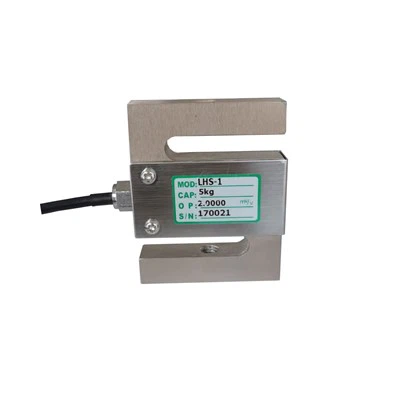


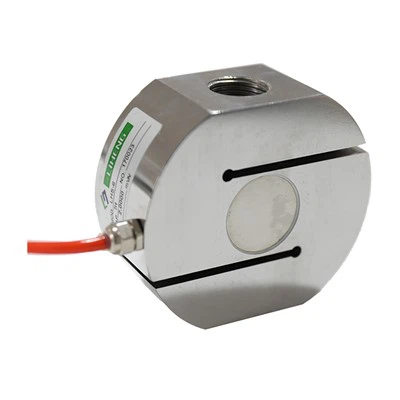
Parameter
|
Material: |
Alloy, Stainless |
|
Capacity |
5kg to 20t |
|
Rated Output: |
2mV/V, 3mV/V |
|
Non Linearity: |
±0.02%F.S. |
|
Hysteresis: |
±0.02%F.S. |
|
Repeatability: |
±0.01%F.S. |
|
Creep (30min): |
±0.02%F.S. |
|
Zero Balance: |
±1.00%F.S. |
|
Tem.Effect on Zero: |
±0.02%F.S./10℃ |
|
Tem.Effect on Output: |
±0.02%F.S./10℃ |
|
Input Impendance : |
385±10Ω |
|
Out Impendance: |
350±3Ω |
|
Insulation Impendance: |
≥5000MΩ |
|
Excitation Voltage: |
10V (DC/AC) |
|
Compensated Tem.Range: |
-10℃~+50℃ |
|
Service Tem.Range: |
-20℃~+60℃ |
|
Safe Overload Range: |
120%F.S. |
|
Protection Class: |
IP67 , IP68 |
|
Cable length: |
5m |
|
Wire Code: |
Red(Ex+) Black(Ex-) Green(Sig+) White(Sig-) |
Benefits of S-Type Load Cell
Versatility in Measuring Tension and Compression
One of the most significant benefits of S-type load cells is their ability to measure both tension (pulling forces) and compression (pushing forces) with equal accuracy. This dual functionality makes them ideal for applications where forces may act in either direction, such as in material testing machines, hoists, or cable tension monitoring systems.
High Accuracy and Sensitivity
The concentrated strain in the central section of the S-shape allows for precise measurement, even at low load levels. Many S-type load cells offer accuracy classes of 0.1% or better, meaning their output deviates from the true force value by less than 0.1% over their rated range. This level of precision is essential in industries like pharmaceuticals, where dosage accuracy is critical, or aerospace, where weight and balance measurements must be exact.
Compact Design
S-type load cells are relatively small compared to other load cell types like beam or column load cells, making them easy to integrate into tight spaces. Their compact size is particularly advantageous in automated machinery, robotics, and portable testing equipment, where space is often limited.
Robust Construction
Built from high-strength alloys and protected by encapsulation, S-type load cells are designed to withstand harsh industrial environments. They can operate in temperatures ranging from -40°C to 150°C (depending on the model), resist vibration and shock, and tolerate exposure to chemicals or moisture (if properly sealed). This durability ensures a long service life, even in demanding applications.
Cost-Effectiveness
Despite their high performance, S-type load cells are generally more affordable than specialized load cells like piezoelectric or capacitive sensors. This cost-effectiveness, combined with their versatility, makes them a popular choice for both industrial and academic applications where budget constraints may exist.

Proper installation is essential for accuracy. The applied force must be aligned with the load cell’s central axis.
In tension applications:
Eyebolts or rod ends keep the load centered.
Hardware must be tightened correctly to avoid binding or accidental unthreading.
In compression applications:
Mounting surfaces must be level and stable.
If the item being weighed can sway or twist, measurement errors can occur.
In some cases—such as unstable or off-center loads—other sensor types (like shear beam load cells) may be better suited.
Components of an S-Type Load Cell
An S-Type load cell is made up of several coordinated elements:
Strain Gauges
Mounted on strategic points to detect deformation.
Wiring & Connectors
Carry low-level signals with minimal interference.
Protective Sealing
Guards internal components from moisture, dust, and vibration.
Applications of S-Type Load Cells
Industrial Manufacturing and Automation
In manufacturing, S-type load cells are used to monitor and control processes where force is a critical parameter. For example, in assembly lines, they may measure the torque applied when tightening bolts to ensure they are neither too loose (risking failure) nor too tight (damaging components). In plastic injection molding, load cells can detect jams by measuring abnormal forces on the mold, triggering an automatic shutdown to prevent damage. They are also used in robotic arms to provide feedback on grip strength, ensuring delicate objects are handled without being crushed or dropped.
Material Testing
Material testing laboratories rely heavily on S-type load cells to determine the mechanical properties of materials like metals, plastics, and composites. Tensile testing machines use S-type load cells to measure the force required to stretch a sample until it breaks, providing data on ultimate tensile strength, yield strength, and elongation. Similarly, compression testing machines use these load cells to evaluate the strength of concrete, ceramics, or packaging materials. The precision of S-type load cells ensures that test results are accurate and repeatable, which is essential for material certification and quality control.
Weighing and Force Measurement Systems
While platform scales often use beam load cells, S-type load cells are preferred for applications where space is limited or where both tension and compression may be encountered. For example, hanging scales (used in warehouses to weigh heavy objects suspended from cranes) use S-type load cells due to their ability to handle tension loads. They are also used in small bench scales and laboratory balances, where their high sensitivity allows for precise measurement of small weights.
Aerospace and Defense
In the aerospace industry, where safety and reliability are paramount, S-type load cells play a vital role in testing aircraft components, such as wings, landing gear, and engine mounts. They are used to simulate the forces experienced during flight (e.g., lift, drag, turbulence) and ensure that components can withstand extreme conditions. In defense applications, load cells may be integrated into missile guidance systems or armor testing equipment to measure impact forces and structural integrity.
Medical Devices
The medical field requires precise force measurement for applications ranging from surgical tools to rehabilitation equipment. S-type load cells are used in devices like robotic surgical systems to control the force applied during procedures, preventing tissue damage. They also appear in physical therapy machines, where they monitor the resistance provided to patients during exercises, ensuring workouts are safe and effective. In prosthetics, load cells can measure the pressure exerted by artificial limbs, helping to optimize fit and comfort.
Civil Engineering and Structural Monitoring
Bridges, buildings, and dams are subject to constant forces from traffic, wind, and water. S-type load cells are embedded in these structures (or attached to cables and supports) to monitor strain and stress over time, providing early warning of potential failures. For example, in suspension bridges, load cells measure the tension in cables to ensure they remain within safe limits, while in buildings, they may monitor the load on support beams during construction or after earthquakes.
Food and Pharmaceutical Processing
In the food and pharmaceutical industries, hygiene and precision are critical. S-type load cells made from stainless steel (which is easy to clean and resistant to corrosion) are used in filling machines to measure the weight of ingredients or medications, ensuring accurate dosages. They also appear in packaging equipment, where they verify that packages are filled to the correct weight, compliance with regulatory standards, and prevent product waste.
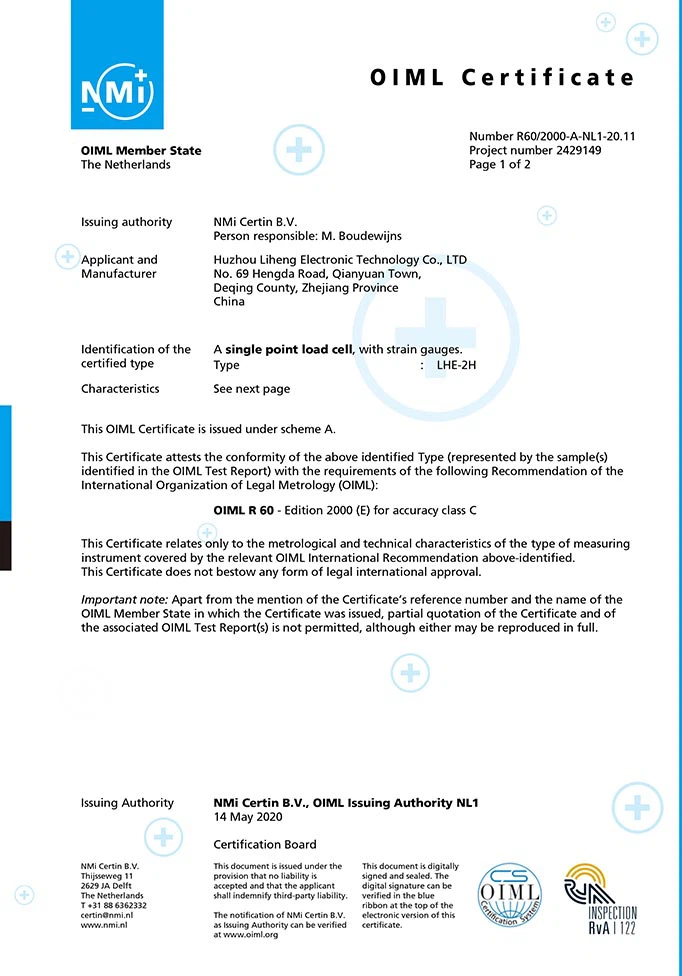
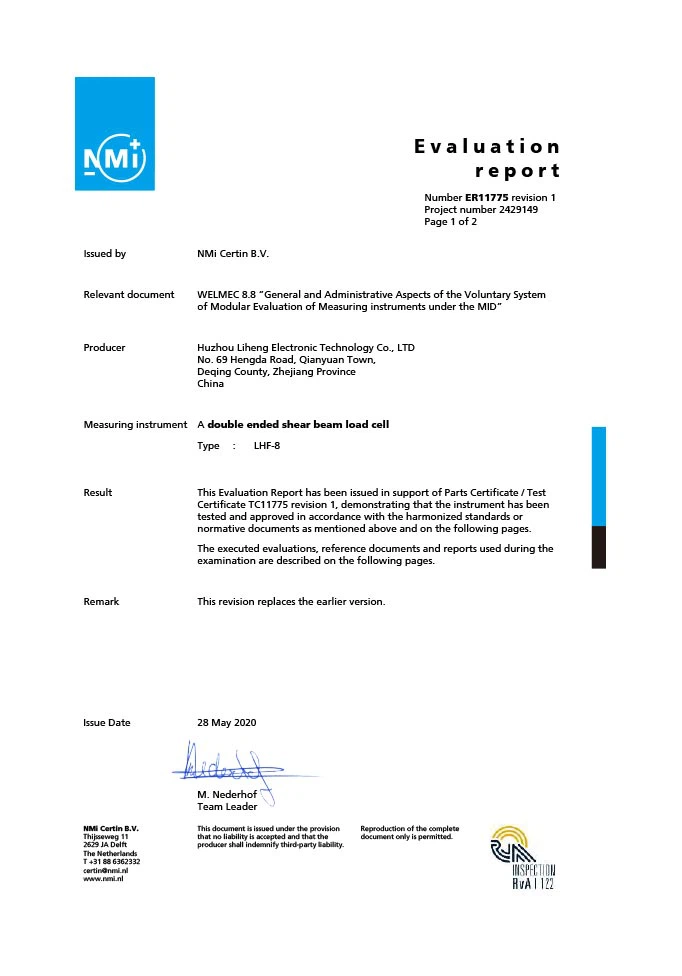
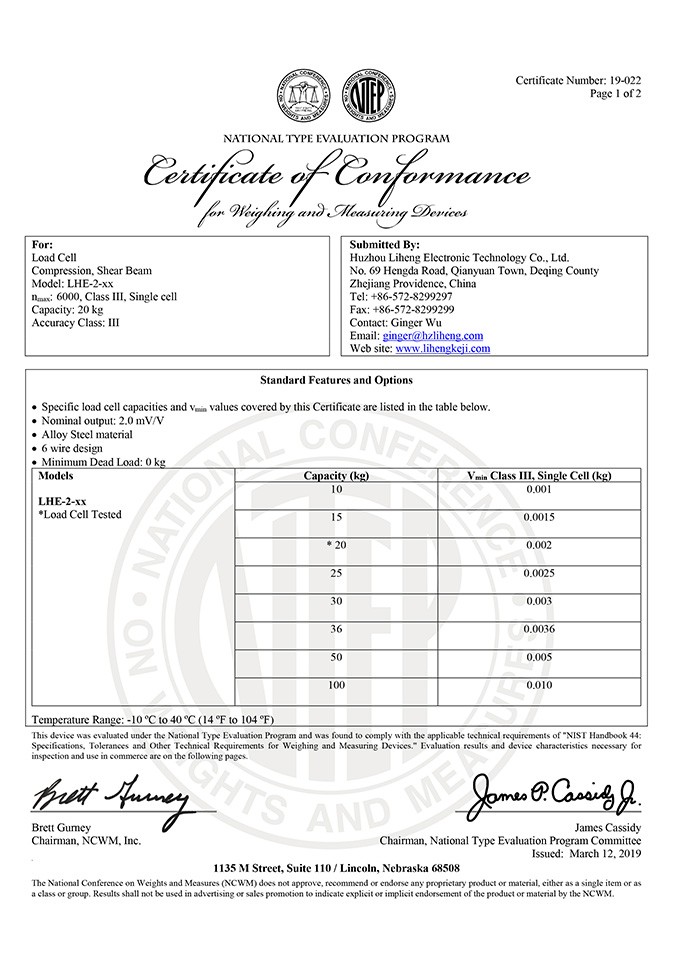
Certificate


Delivery Information
We offer flexible shipping options including air freight for urgent orders and sea freight for bulk shipments. All load pin load cells are securely packaged with protective materials to ensure safe and damage-free delivery worldwide.
FAQ