


Single Point Load Cell
Your Professional Single Point Load Cell Supplier
We specialize in designing and manufacturing load cells and force sensors for industrial weighing and measurement applications.
Our main products include load cells, force sensors, weighing modules, as well as single point, shear beam, and compression types.


Parameter
|
Material: |
Aluminum |
|
Capacity: |
0.3kg-250kg |
|
Rated Output: |
2mV/V(1kg-2kg, 1mV/V) |
|
Non Linearity: |
±0.02%F.S. |
|
Hysteresis: |
±0.02%F.S. |
|
Repeatability: |
±0.01%F.S. |
|
Creep (30min): |
±0.02%F.S. |
|
Zero Balance: |
±1.00%F.S. |
|
Tem.Effect on Zero: |
±0.02%F.S./10℃ |
|
Tem.Effect on Output: |
±0.02%F.S./10℃ |
|
Input Impendance : |
410±10Ω |
|
Out Impendance: |
350±3Ω |
|
Insulation Impendance: |
≥5000MΩ |
|
Excitation Voltage: |
10V (DC/AC) |
|
Compensated Tem.Range: |
-10℃~+50℃ |
|
Service Tem.Range: |
-20℃~+60℃ |
|
Safe Overload Range: |
120%F.S. |
|
Protection Class: |
IP67 |
|
Cable length: |
3m |
|
Wire Code: |
Red(Ex+) Black(Ex-) Green(Sig+) White(Sig-) |
Benefits of Single Point Load Cell

Robust and hygienic solution: A single-point load cell acts as a comprehensive solution for weighing processes that require hygienic equipment. With its advanced technology, it’s easy to set up, enabling a faster and more cost-effective installation process.
Quick and easy set-up: Single-point load cells are pre-calibrated and don’t require any on-site calibration in many applications. Mechanical protection devices are not necessary when installing single-point load cells.
High weighing accuracy: The quality and performance of a single-point load cell define its precision and weighing accuracy.
Therefore, manufacturers must provide top-quality load cells so that an accuracy of 0.05%-0.025% can be met that cover a total measurement range from 0 to 150 kg.
Reliable & low-cost: The single-point load cell is largely unaffected by overloads, side loads, shocks, and welding voltages because of its separate capacitive sensor.
Therefore, straightforward mechanical installation of load cell is possible that also eliminates the expense of complicated mounting kits and overload protection devices.
Fewer start-up costs: Because of the fact that single-point load cells are already calibrated at the factory, it eliminates the need for recalibration and eliminates any relative start-up costs.
Extremely sensitive: Single point load cell and detect small changes and measure small loads meaning utilizing very small changes in resistance. Thanks to its simple design and versatile materials, it is extremely durable even at high sensitivity.
Simple maintenance: Its standard design and simple connectivity make it easy to replace any part without the need for recalibration.
High versatility & noise-proof: Single point load cells are manufactured from a wide variety of materials and are suitable for very large and small loads, with many levels of accuracy.

Installation and Calibration of Single Point Load Cells
Proper Mounting Techniques
Single point load cells benefit from precise installation for longevity. Correct mounting minimizes mechanical stress, ensuring accurate measurements.
Calibration Procedures
Regular calibration maintains accuracy. Comparing outputs with standard weights and adjustments ensures consistent performance.
Troubleshooting Common Issues
Routine checks and calibration adjustments resolve signal fluctuations or inaccuracies, sustaining reliable load cell performance.
Applications of Single Point Load Cells
Industrial Weighing Scales
Ideal for platform scales, these load cells provide high accuracy in commercial weighing applications.
Batching and Filling Systems
They ensure precise measurements, crucial for maintaining consistency in material handling and packaging.
Checkweighing
Employed in quality control processes to ensure product weight meets specified standards.
Materials Testing
Crucial for determining the mechanical strength of materials and components.
Types of Single Point Load Cells
Aluminum Load Cells
Cost-effective, suitable for general use.
Stainless Steel Load Cells
Corrosion-resistant, ideal for harsh environments.
Alloy Steel Load Cells
Durable, and versatile for various weighing systems.
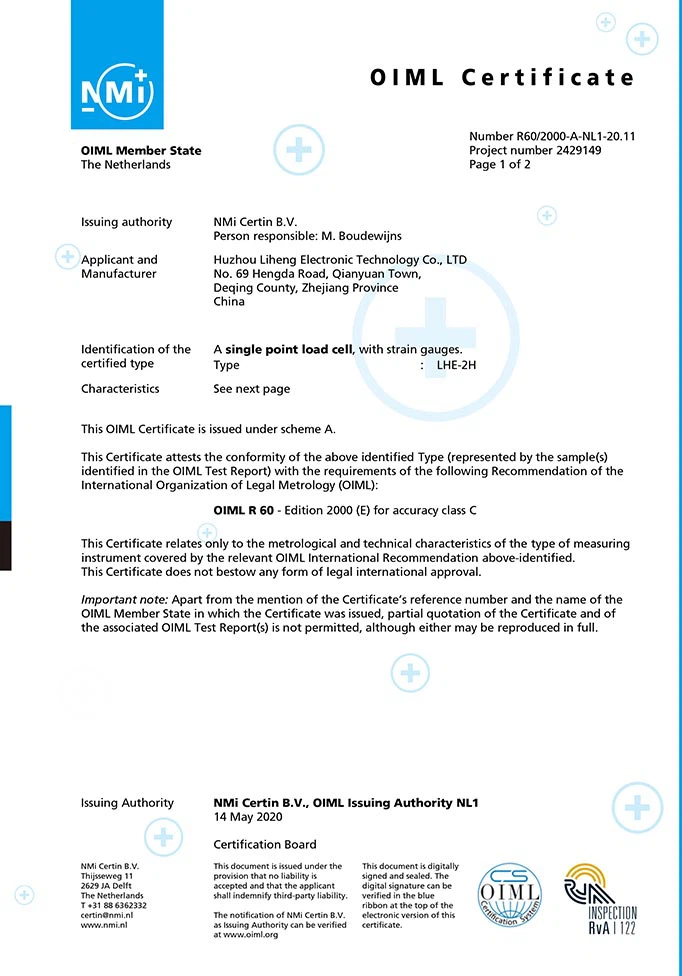
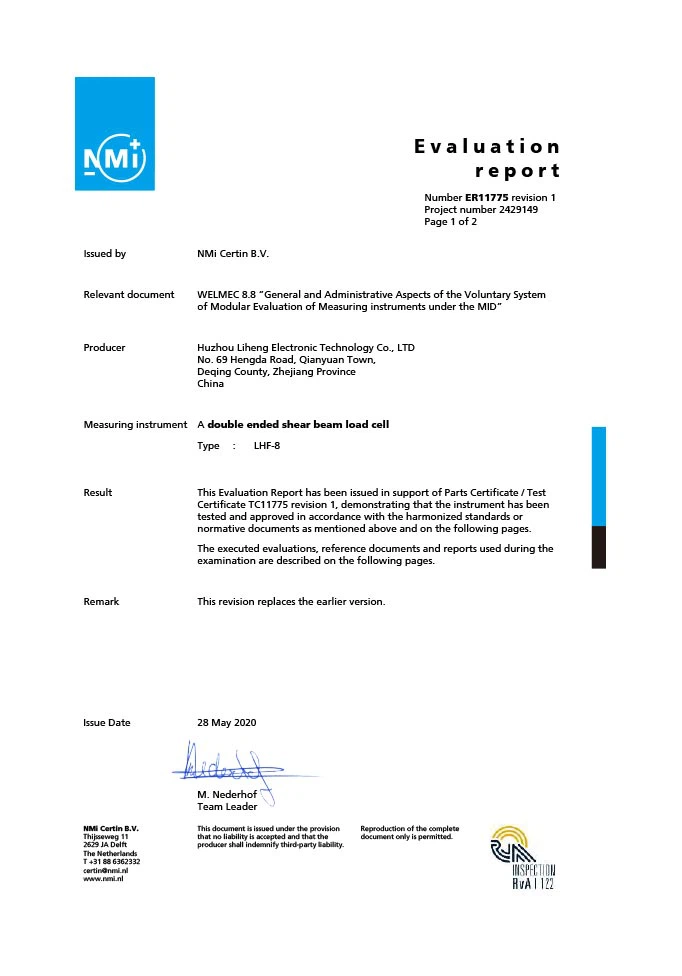
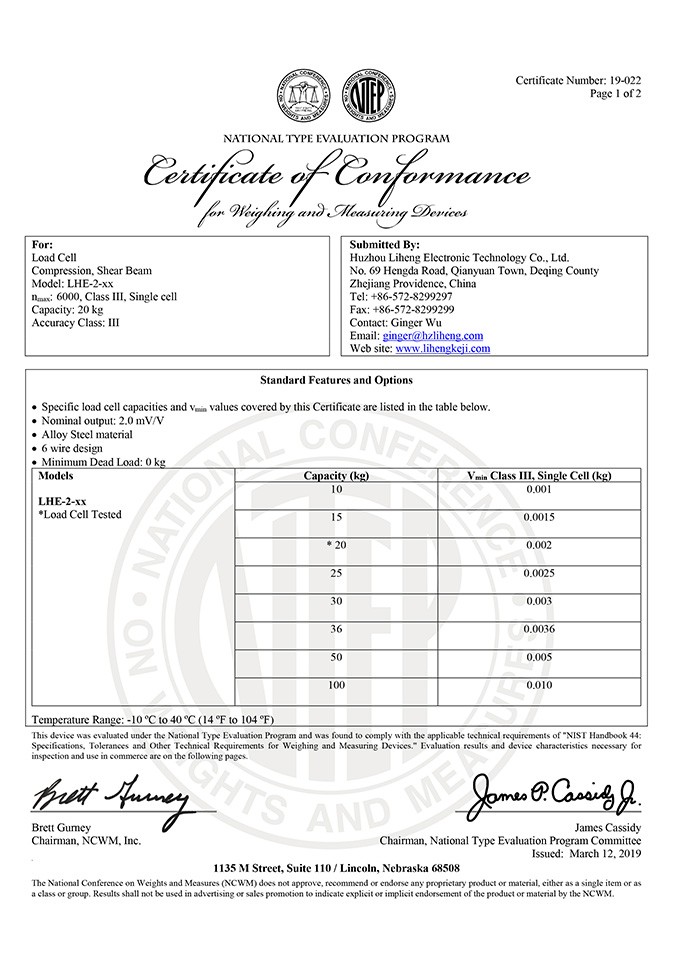
Certificate


Payment and Shipping Methods
| Terms Of Payment |
We usually accept T/T, L/C, Paypal, Credit card, etc. If you prefer other payments terms, please feel free to discuss with us. |
| Shipping |
We support both sea and land transportation. |
FAQ