


Shear Beam Load Cell
Your Professional Shear Beam Load Cell Supplier
We specialize in designing and manufacturing load cells and force sensors for industrial weighing and measurement applications.
Our main products include load cells, force sensors, weighing modules, as well as single point, shear beam, and compression types.


Parameter
|
Material: |
Alloy,Stainless |
|
Capacity: |
50kg-10t |
|
Rated Output: |
2mV/V, 3mV/V |
|
Non Linearity: |
±0.02%F.S. |
|
Hysteresis: |
±0.02%F.S. |
|
Repeatability: |
±0.01%F.S. |
|
Creep (30min): |
±0.02%F.S. |
|
Zero Balance: |
±1.00%F.S. |
|
Tem.Effect on Zero: |
±0.02%F.S./10℃ |
|
Tem.Effect on Output: |
±0.02%F.S./10℃ |
|
Input Impendance : |
385±10Ω |
|
Out Impendance: |
350±3Ω |
|
Insulation Impendance: |
≥5000MΩ |
|
Excitation Voltage: |
10V (DC/AC) |
|
Compensated Tem.Range: |
-10℃~+50℃ |
|
Service Tem.Range: |
-20℃~+60℃ |
|
Safe Overload Range: |
120%F.S. |
|
Protection Class: |
IP67, IP68 |
|
Cable length: |
6m |
|
Wire Code: |
Red(Ex+) Black(Ex-) Green(Sig+) White(Sig-) |

Rugged: Machined from durable metals like steel or aluminum to withstand harsh conditions.
Precise: Exceptional accuracy due to focused shear strain and Wheatstone bridge circuitry.
Versatile: For static weighing, dynamic force measurement and process monitoring.
Easy to Install: Designed for quick and hassle free integration.
Low Maintenance: Minimal upkeep to maximise uptime.
Environmental Resilience: Withstand extreme temperatures, moisture, vibration and side loads.
Cost Effective: Advanced technology with long term value.
Application of Shear Beam Load Cell
Shear beam load cells are a standard component in platform scales. They give reliable and precise measurements. In retail environments, these scales are crucial for ensuring accurate pricing of goods.
Industrial Weighing
Shear beam load cells help monitor materials in manufacturing. This keeps processes operating without interruption. They can handle heavy loads, making them suitable for large-scale operations.
Hoppers and Bins
Many industries use shear beam load cells to weigh hoppers or bins. These hold raw materials or products. This helps manage inventory well. It makes sure the right amount of materials is used in production.
Automotive Uses
Shear beam load cells test and ensure quality in cars. They measure the weight of parts. This ensures they meet set tolerances.
Construction and Civil Engineering
Workers use shear beam load cells to weigh materials. This ensures builders build safely and follow regulations.
When a load is applied the metal beam deforms slightly and the strain gauges attached to the shear web stretch or compress accordingly. This deformation changes their electrical resistance and creates a signal that reflects the applied force. To get the most accuracy and reliability shear beam load cells often use a Wheatstone bridge configuration. This uses four strain gauges in a diamond pattern: two gauges increase in resistance under tension and two decrease under compression. This imbalance creates a differential voltage which is then amplified and sent to an indicator or controller and converts the electrical signal into a readable weight measurement.
Because shear beams measure force not weight directly calibration is required to translate this force into weight readings. Their design also minimizes errors from off-center loads, lateral forces or temperature variations making them very reliable in industrial applications.

Installation of Shear Beam Load Cells
Make sure the surface for the load cell is stable and level. Any unevenness can lead to inaccurate readings.
Align the load cell in the correct position with the structure it measures. Misalignment can affect the performance and accuracy.
Wiring: Connect the load cell to the display or control system as directed by the manufacturer. Proper wiring ensures a stable signal and reduces noise interference.
Calibration: After installation, you must calibrate the load cell to ensure accurate measurements. This process uses known weights. Then, it adjusts the output to match the expected values.
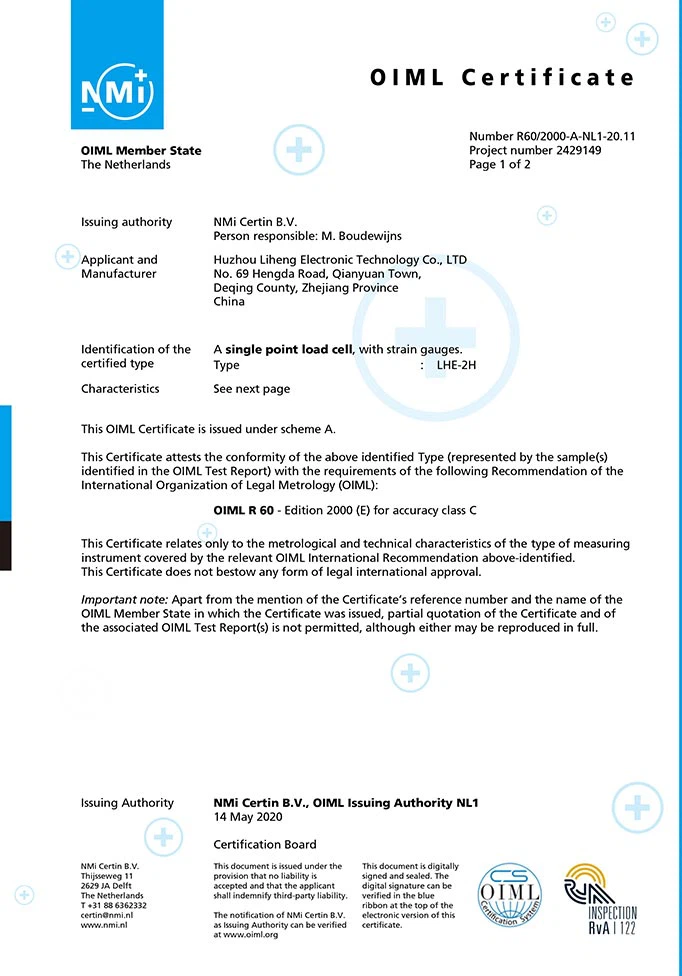
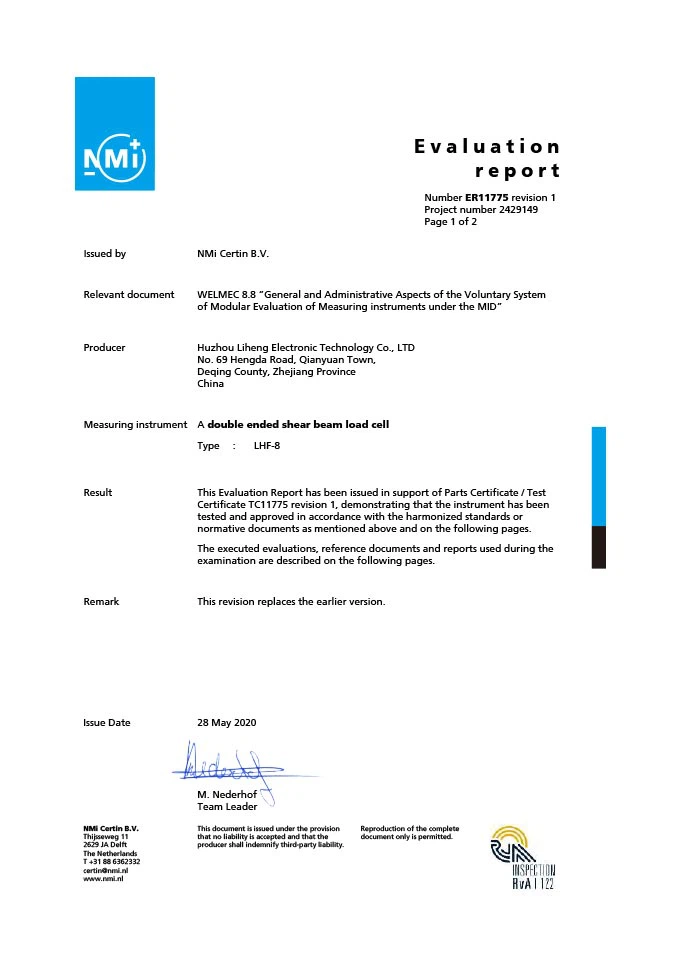
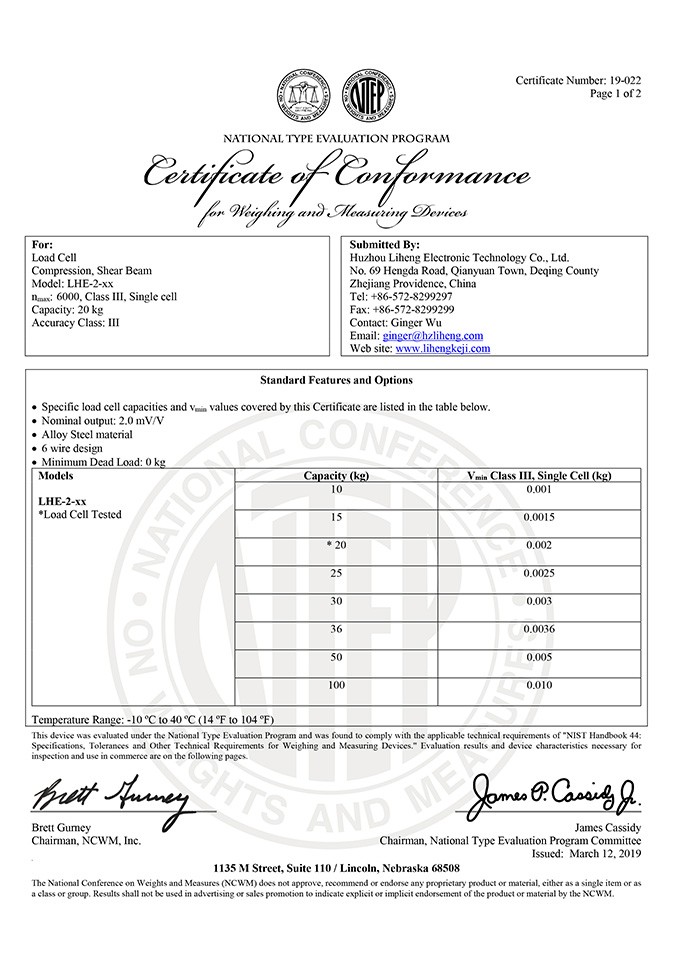
Certificate


Shipping and Payment Information
| Shipping |
We offer various shipping methods, including sea freight, air freight, and express delivery, depending on the order size and destination. |
| Terms Of Payment |
We usually accept T/T, L/C, Paypal, Credit card, etc. If you prefer other payments terms, please feel free to discuss with us. |
FAQ